Home / Blog



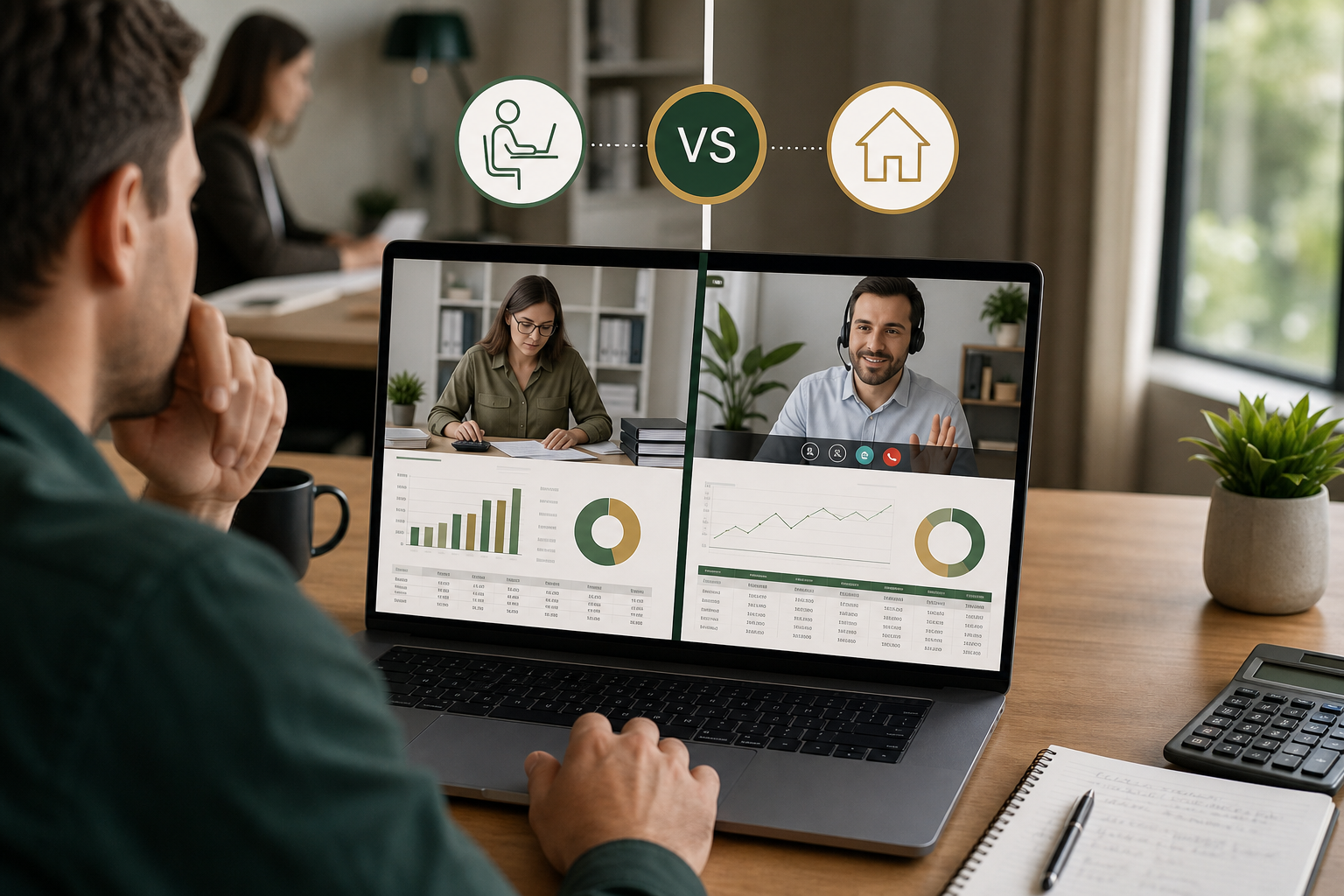
Every growing business reaches a point where bookkeeping can no longer be handled casually. Bank reconciliations, payroll, supplier payments, BAS records, reporting and cash-flow visibility all need consistency. The question is whether to hire an in-house bookkeeper or outsource the function to a professional bookkeeping team.
There is no single answer that suits every business. The right choice depends on transaction volume, payroll complexity, internal systems, budget, management style and how quickly the business is changing. This guide compares both options from a practical accounting perspective so you can choose the model that supports accuracy, control and growth.
An in-house bookkeeper is employed directly by the business. They usually work from the office or within the company’s internal systems and may be full-time, part-time or casual. Their role can include entering bills, coding transactions, reconciling bank feeds, preparing payment files, processing payroll, maintaining debtor records and supporting BAS preparation.
The main advantage is availability. An in-house person can learn the business closely, respond to staff quickly and see operational issues as they happen. This can be useful for businesses with high daily transaction volume, stock movement, cash handling or complex internal approvals.
The limitation is that one person may not cover every skill area. If the bookkeeper is away, overloaded or unfamiliar with a particular compliance issue, the business can be exposed.
An outsourced bookkeeper is an external provider engaged to manage defined bookkeeping tasks. The provider may work remotely through cloud accounting software such as Xero or MYOB, and the service can be scaled from basic reconciliations to a broader finance administration function.
Typical outsourced bookkeeping can include bank reconciliation, accounts payable, accounts receivable, payroll support, BAS-ready records, management reporting, cash-flow reports and clean-up projects. A strong outsourced provider also brings process discipline: document collection, review checkpoints, month-end close routines and clear reporting deadlines.
The main benefit is access to a team and a system rather than relying on one employee. The trade-off is that communication needs to be structured. The best outsourced arrangements work when the business has clear document sharing, approval rules and response times.
| Factor | In-house bookkeeper | Outsourced bookkeeper |
|---|---|---|
| Cost | Salary, super, leave, training, software access and management time. | Fixed monthly or scoped service fee, often easier to align with workload. |
| Availability | Immediate internal access during working hours. | Scheduled support with agreed turnaround times and escalation points. |
| Expertise | Depends on the skill level of one person. | Access to a broader team with bookkeeping, payroll and compliance experience. |
| Technology | Business must usually manage software setup and process improvement. | Provider often brings cloud accounting workflows, automation and reporting discipline. |
| Flexibility | Harder to scale quickly without hiring or reducing hours. | Can often increase or reduce service scope as the business changes. |
| Security | Direct internal control, but access may be broad if not managed. | Needs secure permissions, document sharing and confidentiality controls. |
| Best fit | High-volume businesses needing daily on-site support. | Small to medium businesses wanting reliable finance support without a full-time hire. |
Cost is usually the first point of comparison, but it should not be reduced to hourly rates only. An in-house bookkeeper carries employment costs: wages, super, leave, payroll tax where applicable, recruitment, training, equipment, software licences and management oversight. If the role is part-time, the business may still face coverage issues when work increases.
Outsourced bookkeeping is usually priced by scope, transaction volume, payroll frequency or reporting requirements. The cost can be more predictable because the service is tied to agreed deliverables. For many small businesses, outsourcing avoids paying for unused capacity while still keeping the books up to date.
However, the cheapest option is rarely the best option. Poor bookkeeping can lead to missed BAS deadlines, incorrect GST treatment, unreliable reports and expensive clean-up work.
An in-house bookkeeper can save time when the business needs frequent internal coordination. They can walk to the sales team, clarify supplier invoices and follow up staff quickly. But they also need management, performance review, training and backup planning.
An outsourced bookkeeper saves time by taking routine processing and month-end work out of the business owner’s day. The owner still needs to approve payments, provide documents and review reports, but the workflow can be structured and repeatable. This is especially valuable when the owner is currently doing bookkeeping after hours.
Modern bookkeeping is heavily technology-driven. Bank feeds, receipt capture, invoice automation, payroll systems and reporting dashboards can reduce manual work, but only if they are set up properly.
An outsourced provider will usually be comfortable working across cloud accounting systems and may identify better workflows quickly. An in-house bookkeeper may also be excellent with technology, but the business needs to recruit for that skill and keep it current.
Businesses using cloud accounting should consider who will maintain the system, review automation rules and ensure reports are meaningful.
Both models need strong controls. In-house bookkeeping is not automatically safer if one person has unrestricted access to bank payments, payroll records and accounting changes. Outsourced bookkeeping is not automatically risky if permissions, confidentiality and approvals are properly managed.
Good controls include separate payment approval, individual user logins, limited permissions, secure document sharing, audit trails and regular review of supplier and employee master data. The model matters less than the discipline around access and review.
An experienced in-house bookkeeper can be a valuable operational asset. They understand the business’s habits, suppliers, staff and pressure points. This is useful where finance administration is closely tied to daily operations.
Outsourced bookkeeping is often stronger when the business wants flexible capacity and access to a broader team. If transaction volume increases, payroll becomes more complex or reporting needs improve, the service can often be expanded without another recruitment process.
For a startup or growing SME, scalability can be the deciding factor. The business may not need a full-time bookkeeper today, but it does need accurate records and advice-ready reporting.
For many small and medium businesses, outsourcing is the more practical starting point. It gives access to bookkeeping systems, review processes and professional support without committing to a permanent hire. As the business grows, the model can evolve into a hybrid arrangement, with internal administration supported by an external bookkeeping and accounting team.
If your business already has a strong in-house bookkeeper, outsourcing may still help with overflow work, payroll review, BAS preparation support or management reporting.
The outsourced vs in-house bookkeeper decision is really a question of control, capacity and consistency. If you need someone embedded in daily operations, in-house may be right. If you need accurate books, scalable support and better reporting without hiring, outsourcing is often the stronger commercial choice.
Need help choosing the right bookkeeping model? Procura Global Accounting provides outsourced bookkeeping services, outsourced accounting and finance support for Australian businesses. Book a free consultation to review your current setup.

Procura Global Accounting provides trusted accounting, tax, and advisory services that simplify finances, ensure compliance, and support confident business growth.